LineSkip is a mobile app redesign that gives students a centralized tool for information on live line lengths, crowd levels, cover prices, and events in one place.
PRODUCT
LineSkip
TIMELINE
Nov - Dec 2025
ROLE
Product Designer
FOCUS
Mobile Product Design, Prototyping, Systems Thinking
LineSkip is a mobile app redesign that transforms LineLeap, a basic bar ticketing tool, into a real-time nightlife platform for University of Michigan students. The problem at Michigan is ongoing, students go out to bars two to three nights a week, but have no reliable way to know what to expect at their usual spots and rely on guesswork to time their nights right.
I designed a solution with LineSkip as part of a theoretical project for my advanced design class in Fall 2025. I worked with a partner to design from 0-1, focusing on information architecture, visual design, and building a cohesive design system in Figma.
The Problem
University of Michigan students go out to the same bars and venues each weekend, but lack the context they need to know what they're walking into. Line waits can range from under 30 minutes to over three hours with no way to check in advance. Cover prices change throughout the night without warning. Deals, events, and bar crawls come and go with no centralized place to find them. The existing LineLeap app focuses narrowly on ticketing and offers none of this context, leaving students making uninformed decisions and wasting time in lines they didn't need to be in.
Key Design Decisions
01. Live Updates That Remove Guesswork
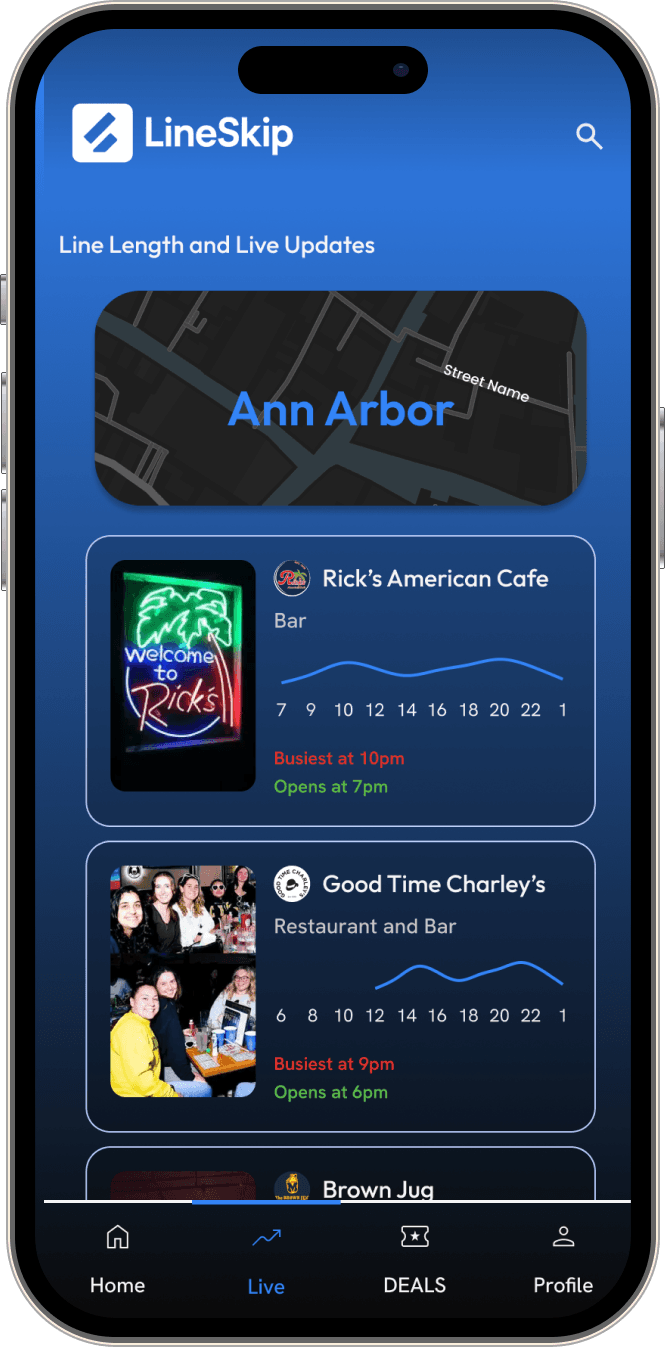
The core problem was uncertainty. Students were committing to a bar without knowing whether the line was five minutes or two hours long. With LineSkip, we implemented a live updates system that surfaces real-time and recent line patterns, visual indicators for crowd level and peak hours, and clear language built for fast on-the-go decisions. The goal was to make the most critical information the most visible thing on the screen.
02. Elevating the Experience With a Luxury Feel
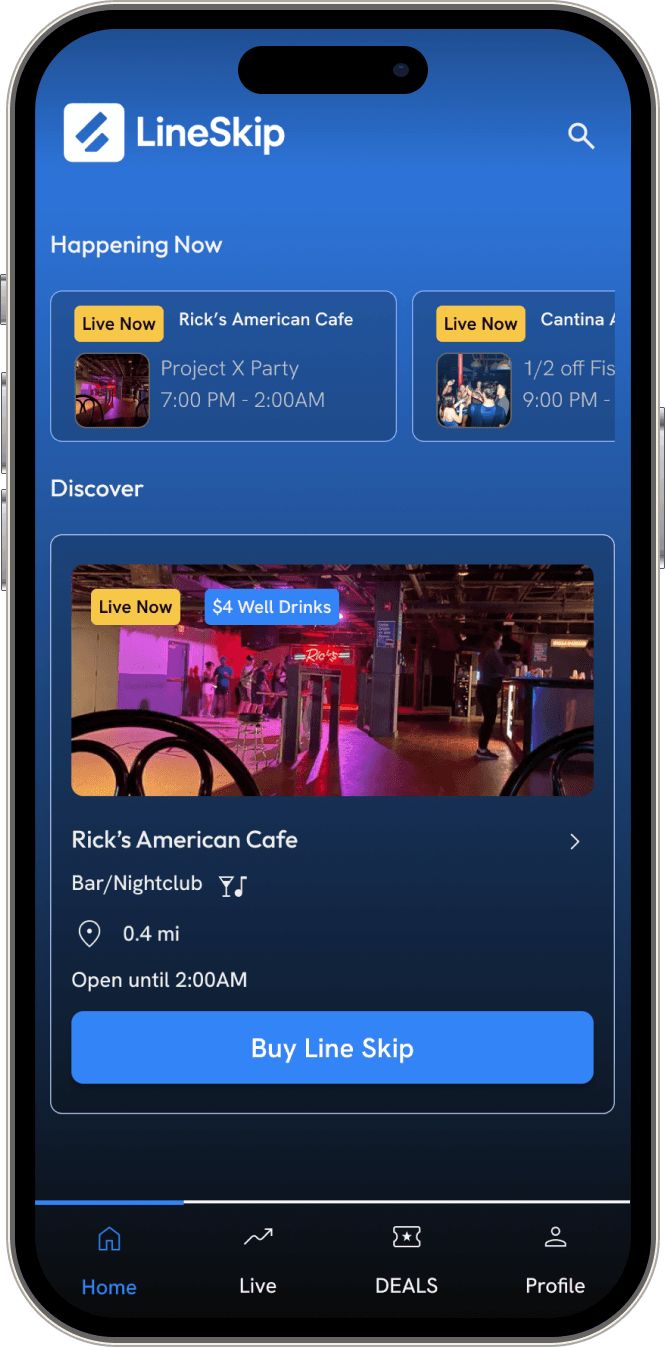
The original iteration of our LineSkip interface felt flat and generic, a grey on white layout that didn't reflect the energy of a night out. My partner brought the gradient visual direction to the project and I jumped on board to carry it through the full design system. Moving away from white backgrounds to a deep brand blue gradient created a premium tone and engaging digital experience to draw students in. In addition, better visual hierarchy made dense information easier to scan without feeling overwhelming.
The Original Design
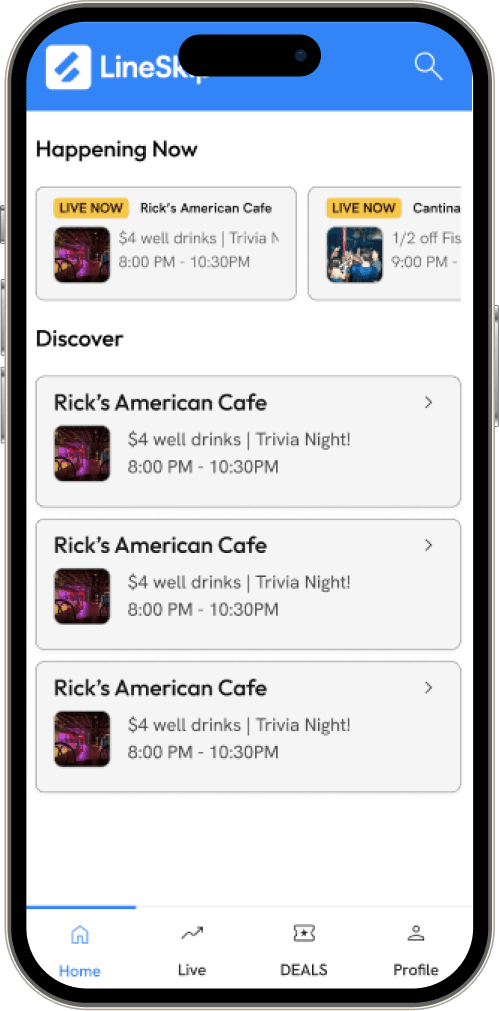
Original: Flat, Generic
Elevated Design
Elevated: Premium, Dynamic
03. Staying in the Know With Events and Deals
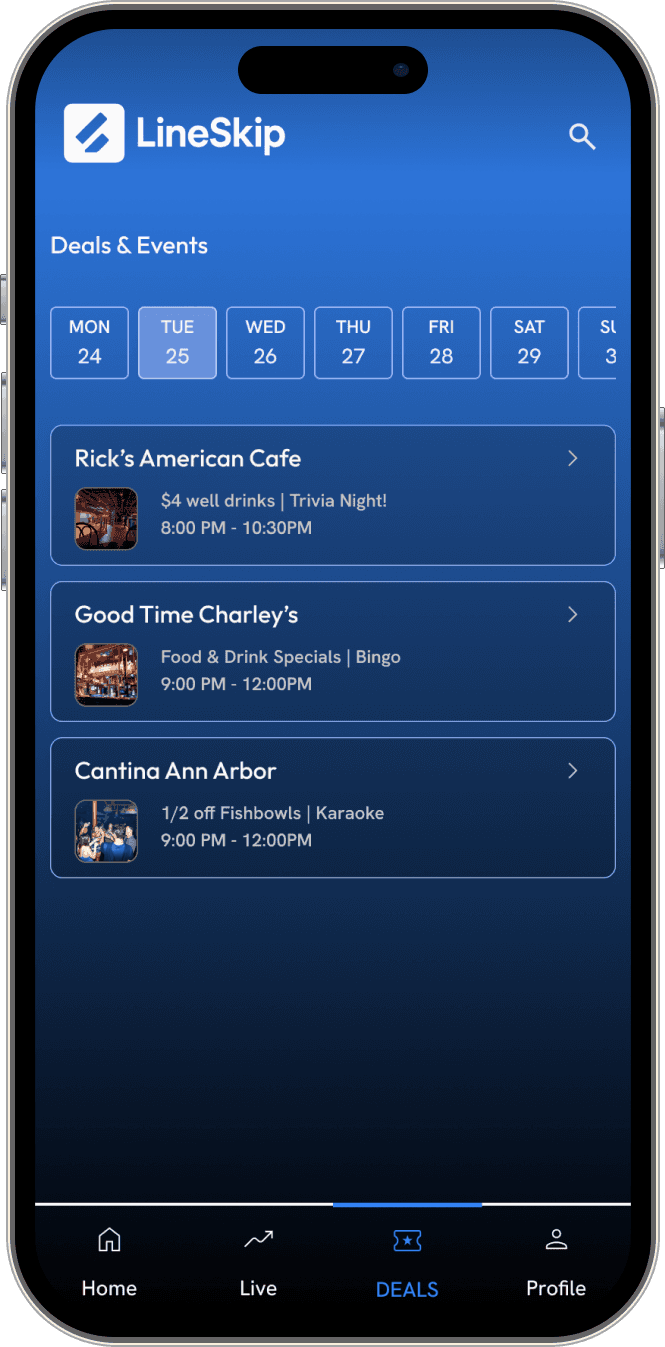
Students were missing out on specials, themed nights, and bar crawls simply because there was no place to find them. I designed a deals and events calendar that supports both planning ahead and spontaneous discovery. Users can browse by bar, filter by date, and see exactly what's happening on any given night. The result is a feature that keeps students connected to the broader nightlife scene rather than just the bar they already know.
Final Outcome
LineSkip transforms LineLeap from a basic ticketing tool into a real-time nightlife platform. The redesign centralizes live line lengths, crowd levels, cover prices, deals, and events in one place, giving students the context they need to make worthwhile decisions.
This was a class project that never saw real users, which is the honest gap in the work. If we were to take it further the next step would be putting the prototype in front of actual students and testing whether the information hierarchy holds up under real nightlife conditions.
OUTCOME 1
Full design system built in Figma
OUTCOME 2
Core features designed end to end
OUTCOME 3
Prototype ready for user testing
How I Would Measure Success
If taken further, success would be measured by whether LineSkip helps students make faster, more confident decisions around nightlife planning. I would track signals like feature usage, decision efficiency, engagement and retention.
These metrics would help validate whether LineSkip could successfully become part of students' going-out routine.
Reflection
This project was about turning an initial idea into a real product direction. I had to define the problem, prioritize what mattered most, and design a focused experience without overbuilding. It strengthened my ability to scope, make decisions, and move work forward in ambiguous, early-stage spaces.