During my internship at Onda I led the design of Crew Chat, a communication feature built to keep surfers coordinated inside the product, from research through engineering-ready handoff.
PRODUCT
Onda
TIMELINE
June - Aug 2025
ROLE
Product Design Intern
FOCUS
Research, Prototyping, Systems Thinking
Onda is a personalized surf recommendation app that helps surfers plan sessions, track performance, and share surf data. During my internship, our team had identified a gap: surfers were leaving the app to coordinate with their crew, relying on external group chats and screenshots to plan sessions together.
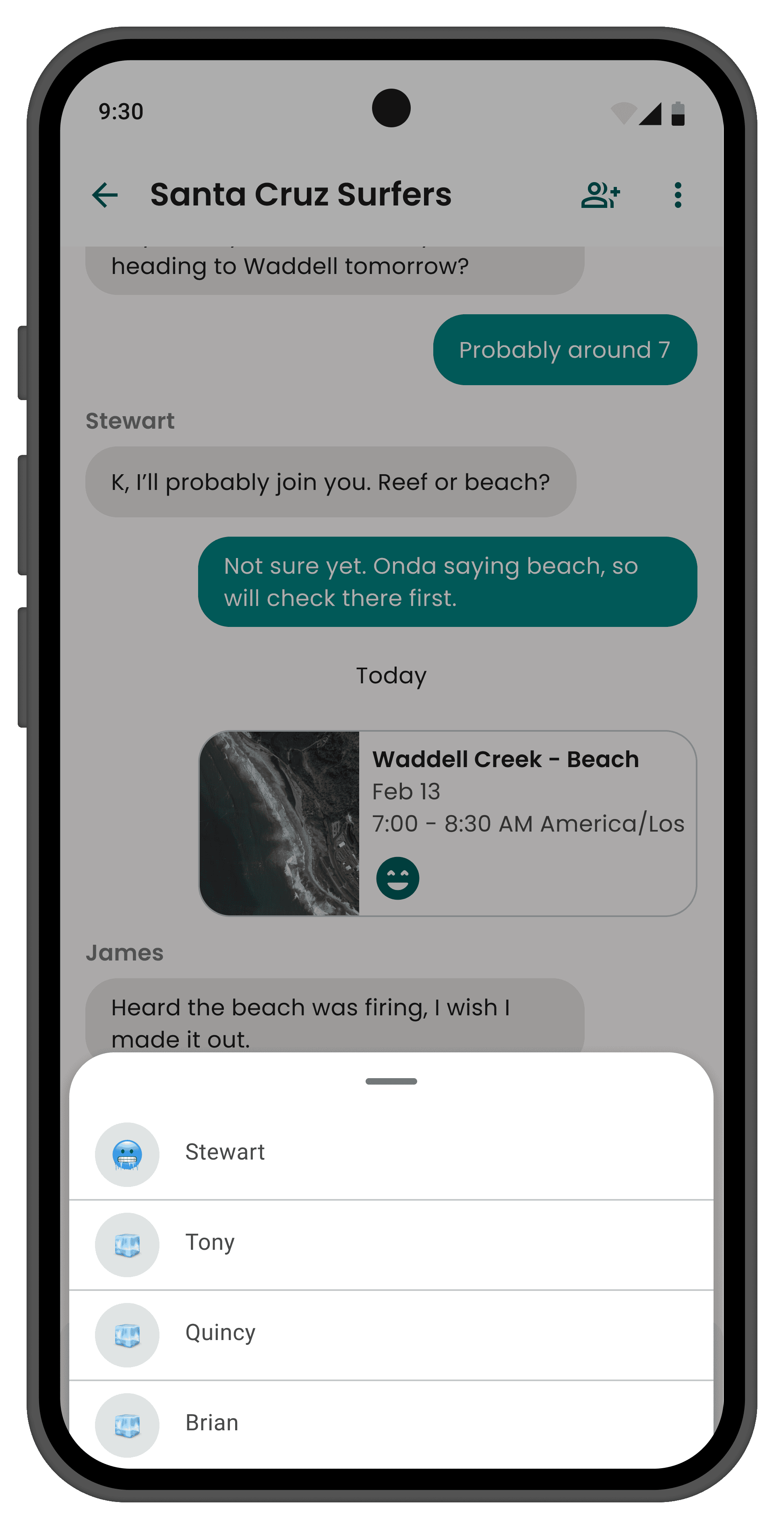
My project was Crew Chat, a communication feature designed to bring that coordination back inside Onda. I led the design from problem definition through engineer-ready handoff, working within the existing design system and technical constraints.
The Problem
Before Crew Chat, surfers coordinating sessions had to leave Onda entirely. They'd share screenshots of forecasts in iMessage threads, manually describe conditions, and lose the connection between surf data and the conversation happening around it.
For users, this meant fragmented coordination. Planning a session required switching between apps, repeating information, and piecing together decisions without shared context. This added unnecessary time and effort to a process that should be linear.
For Onda, this created a gap in the product's core experience. The app provided value in personalized surf recommendations, but it failed to support what users do next when they want to coordinate with others. This meant lost engagements, incomplete workflows, and missed opportunities to deepen retention and integrate the product's role in surfers' routines.
With Crew Chat, I had an opportunity to build coordination directly into the surfers' workflow.
With the problem defined the work became about figuring out what Crew Chat should actually be.
Key Design Decisions
A chat feature can easily become over-scoped, leading to a risk of building something too complex to ship and too heavy to adopt.
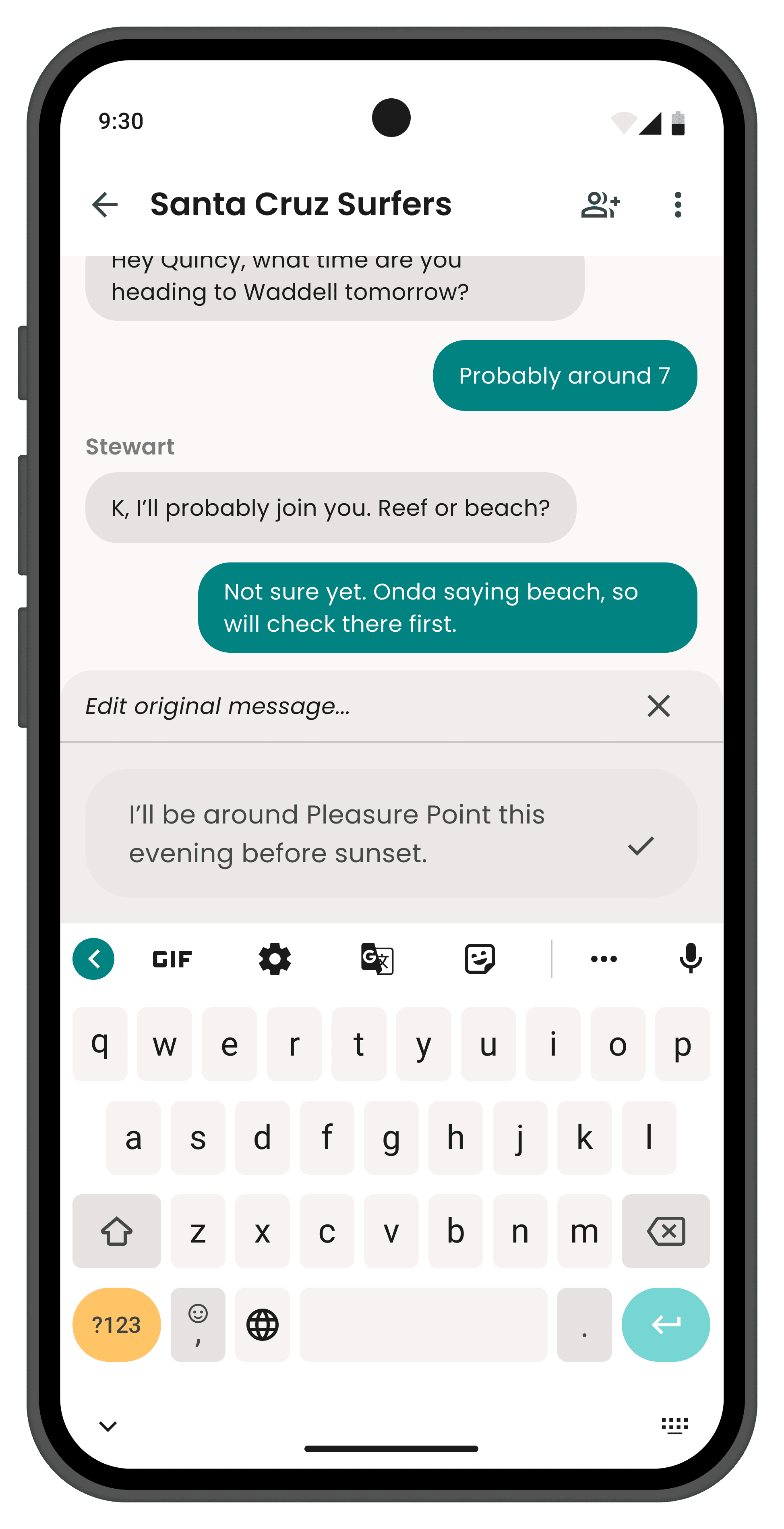
I pulled the scope back to what users would expect from any chat experience at baseline, and mapped everything else as future iterations. That decision gave the engineering team a clear starting point and kept the design focused on getting the core experience right before adding layers.
Baseline/Cosmetic MVP Development
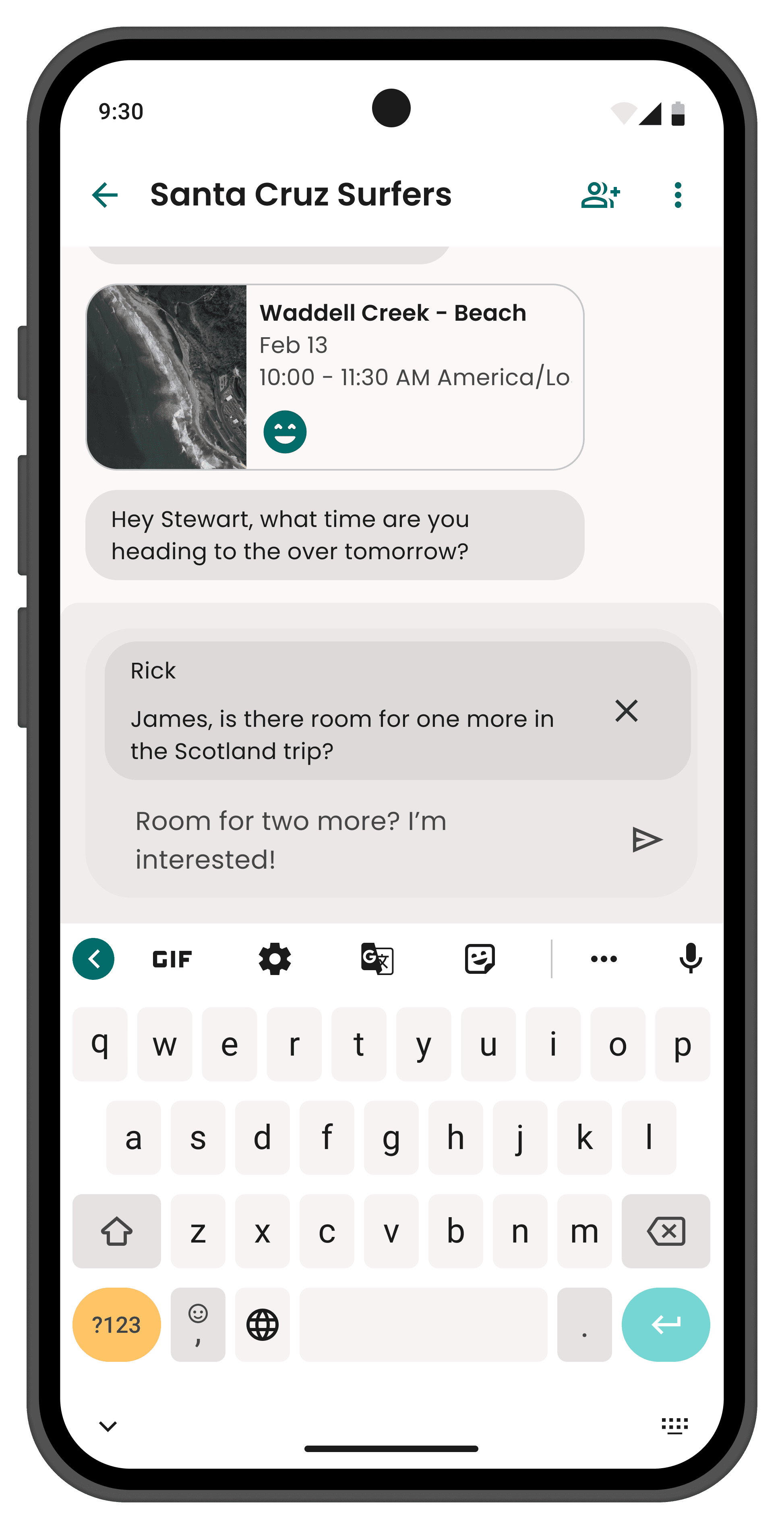
Wireframe iteration 1 includes:
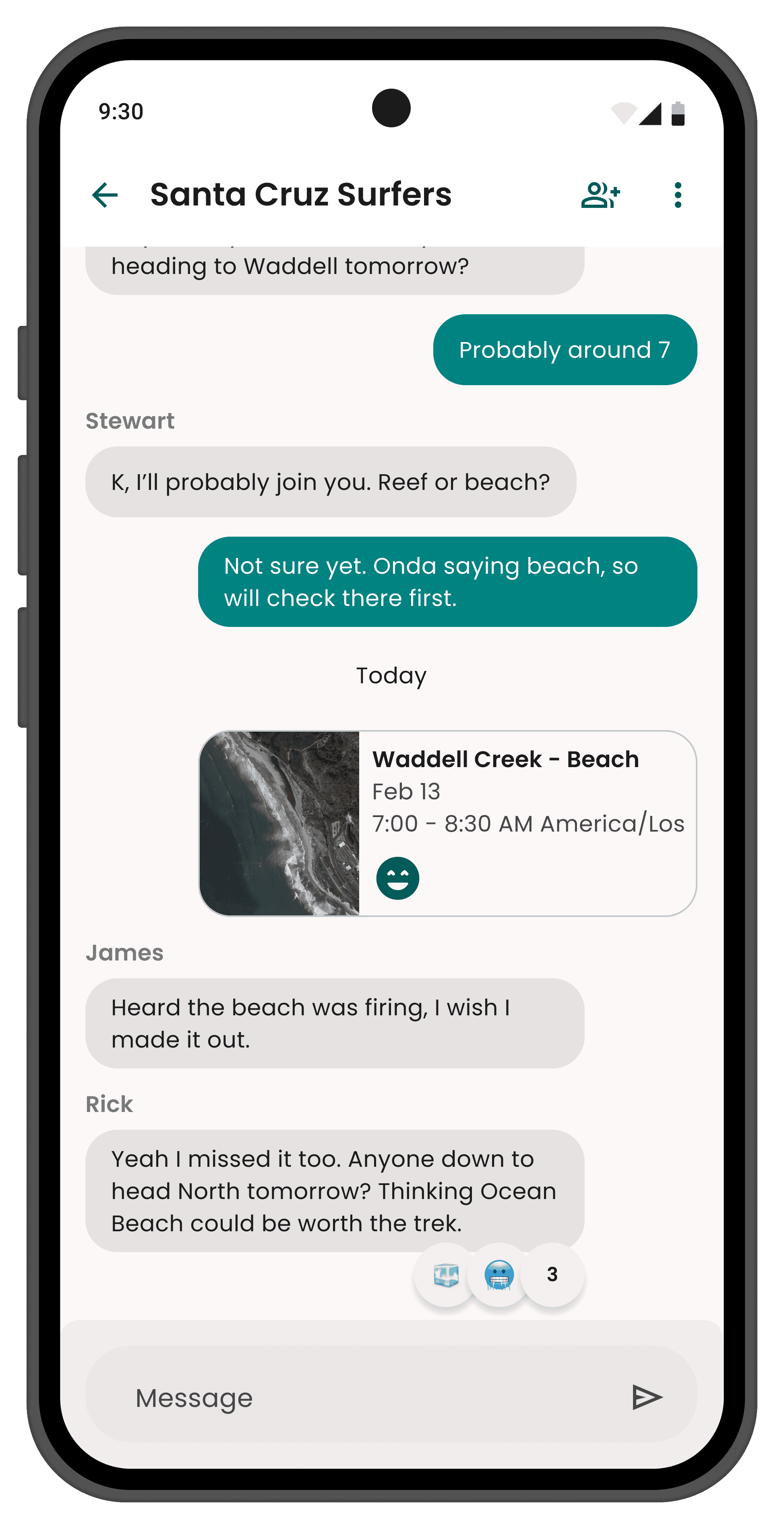
share sessions in chat
@ mentions
long press to interact
—> add reaction —> reply —> copy
Without grounding the feature in real scenarios, chat interactions risked feeling disconnected from how surfers actually coordinate. I mapped common coordination scenarios, built personas around different crew dynamics, and worked through edge cases to design an adaptable and intuitive experience.
The journey map below shows one of those scenarios, a casual surfer named Sarah proposing a session to her crew. Walking through that flow revealed specific interaction decisions around how coordination should be structured at each stage.
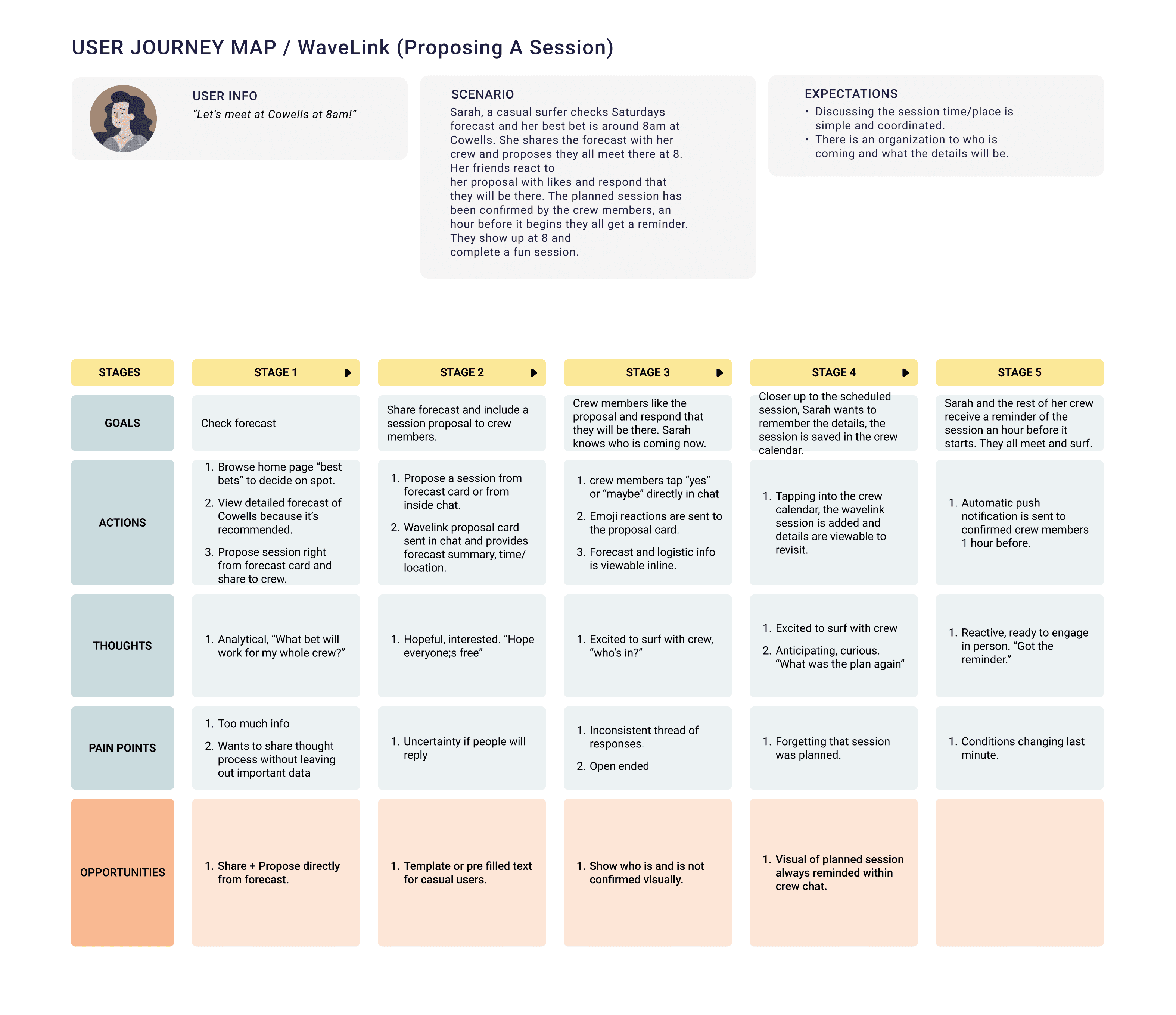
User Journey Map/WaveLink (Proposing a Session)
The most important thing Crew Chat could do differently from iMessage was bring surf data into the conversation. I designed interactions that let users share sessions and forecasts directly into chat, keeping the relevant context visible and supporting users mental models.
I integrated @mentions and long-press actions that gave users control without complexity. The goal was to make the feature feel like it belonged in Onda would keep users active in the app.
Final Outcome
Crew Chat introduced a centralized communication space inside Onda, connecting conversation directly to the surf data within the app. The MVP scope was defined, designed, and documented for engineering handoff, giving the team a clear foundation to build from.
The feature was not yet live when I finished my internship, but the design work established a shared product direction and reduced ambiguity for the team moving into implementation.
OUTCOME 1
MVP scope defined and documented for handoff
OUTCOME 2
Designs aligned with engineering constraints
OUTCOME 3
Foundation established for future iteration
How I Would Measure Success
Although the feature had not shipped yet, success would be measured by how effectively Crew Chat keeps coordination within Onda and increases engagement. I would track feature adoption, engagement depth, retention impact, and end-to-end workflow completion.
These metrics would help validate whether Crew Chat successfully closes the gap between surf insight and real world action.
Beyond Crew Chat
Crew Chat was my primary project but not the full picture of my summer at Onda. I also led user research work through moderated user interviews and usability tests for Spot Chat, a separate community feature the team was evaluating. I prototyped early concepts for Wavelink, exploring how session coordination could integrate into existing product flows. And I contributed to refining shared components and documentation to support clearer cross-functional alignment across the team.
Working across multiple features at once in a resource-limited startup taught me how to prioritize, communicate across functions, and contribute meaningfully beyond my defined scope.
Reflection
This project was one of my first applications of my UX skills to a real-world product. I learned fast and caught on early that it's better to work slowly through process then to jump towards solutions based on assumptions. I adapted quickly in a fast-moving startup product environment to be flexible, prioritize an MVP, and understand the users' needs we were designing for.