Redesigning environmental project onboarding to reduce setup friction and support independent user activation.

PRODUCT
SampleServe (Environmental Compliance SaaS)
TIMELINE
Sept - Apr 2026
ROLE
UX Researcher & Product Designer
TEAM
4 Designers
Environmental professionals relied on SampleServe to manage sampling projects, lab testing, and compliance reporting. However, onboarding was difficult to navigate, causing users to abandon setup, rely heavily on support staff, and struggle to complete critical workflows independently.
Over eight months, our team partnered with SampleServe to redesign onboarding and project setup workflows through research, iterative design, and usability testing.
Outcome:
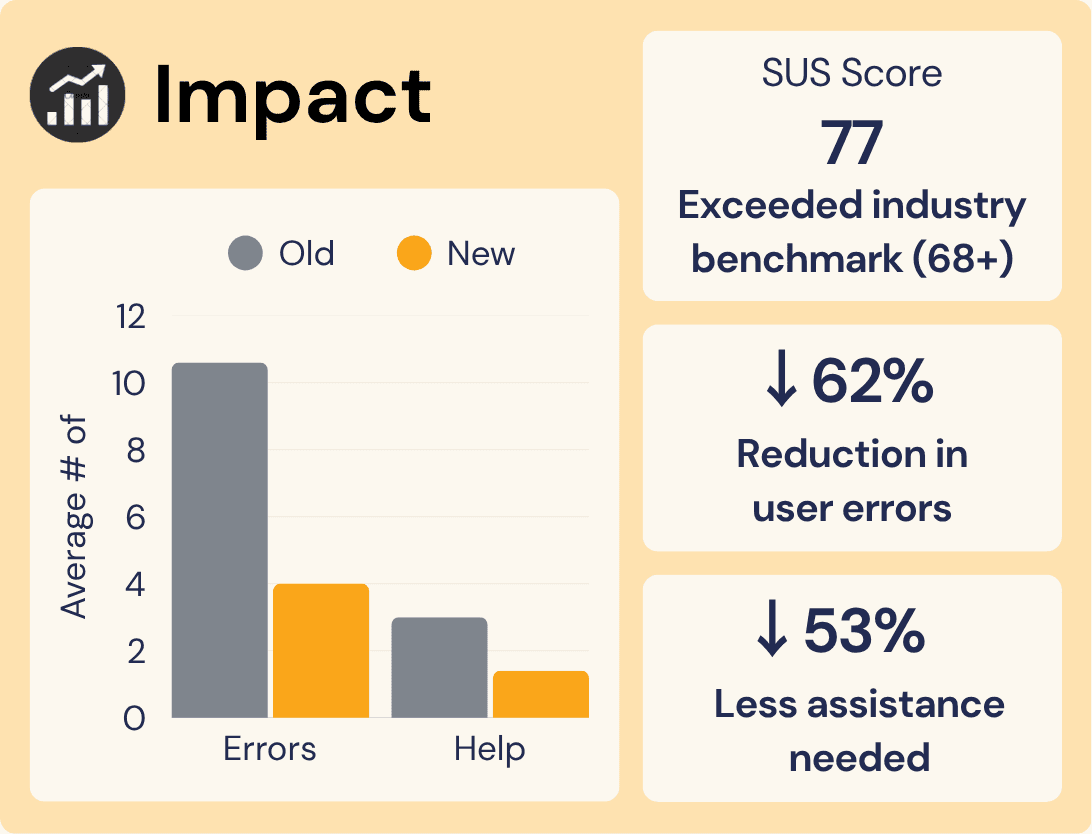
1. Reduced user errors by 62%
Reduced assistance required by 53%
Achieved a SUS score of 77
Improved independent completion of critical onboarding workflows.
The Challenge
SampleServe's onboarding experience was intended to be self-service, but users struggled with project creation, site setup, lab configuration, and workflow navigation. The result was incomplete project setup, increased support burden, and reduced product adoption.
My Role:
As a UX Researcher and Product Designer, I helped:
Conduct mixed methods research
Analyze FullStory behavioral data
Lead user interviews and usability testing
Synthesize findings into UX requirements
Design and prototype onboarding solutions
Validate designs through user testing
Understanding the Problem
Research Approach
Key Insight 1
Users weren't failing because tasks were difficult.
They were failing because they couldn't discover what to do next.
FullStory data showed:
59% drop-off when users needed to create events
Users paused for over 53 seconds searching for the correct action
Once they found the button, completion rates exceeded 97%
Design implication: The issue was visibility and guidance, not workflow complexity.
Key Insight 2
Onboarding depended on human support.
Only 3.4% of users completed onboarding end-to-end independently. Many relied on demos, support calls, and external resources.
One participant explained:
"I didn't know there was an Add Event button until the demo showed me."
Design implication: Users needed guidance embedded directly in the product.
Key Insight 3
Users lost momentum after completing tasks.
Even when users successfully created projects, they often didn't know what to do next.
Participants repeatedly expressed uncertainty about whether they had completed a step correctly and what action should follow.
Design implication: The system needed clearer progress tracking and completion feedback.
The Goals
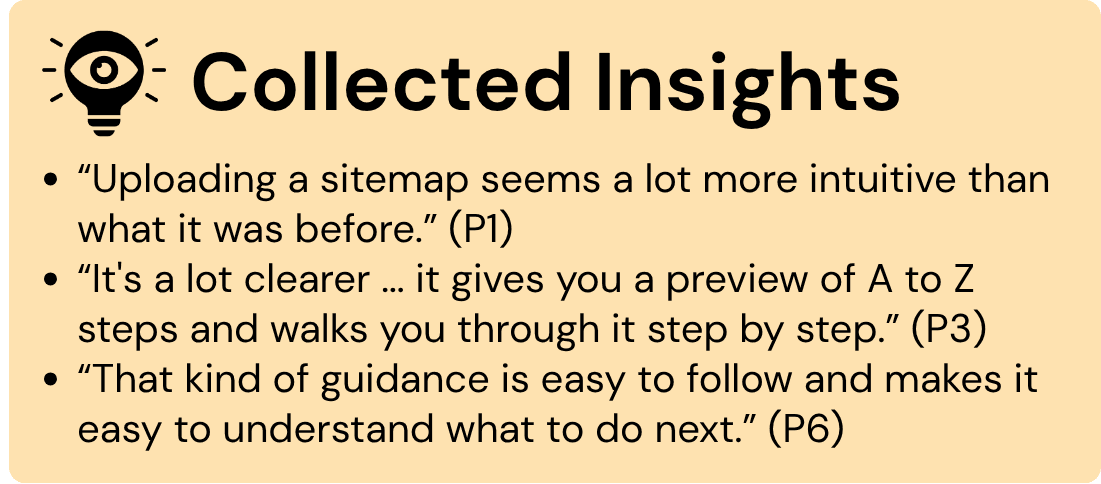
1. Guide users through onboarding
Make onboarding state, progress, and next steps visible.
2. Improve navigation clarity
Reduce complexity and surface primary actions.
3. Support independent completion
Reduce reliance on external support resources.
4. Provide clear feedback
Help users understand what is complete and what remains.
Key Design Decisions

Final Outcome
Reflection
Designing for environmental compliance workflows taught me how much user success depends on workflow structure, not just interface design.
By combining behavioral analytics, interviews, and usability testing, I learned how to distinguish between a task that is inherently difficult and a task that simply lacks guidance.
This project reinforced the value of designing systems that help users understand:
Where they are
What they've completed
What happens next